
Think SEO is all about keywords and meta tags? Think again. Off Page SEO goes beyond your website—it's about building credibility, earning trust, and proving to Google (and your audience) that you deserve to rank. From backlinks and brand mentions to social signals and online reputation, Off Page SEO plays a critical role in where your site appears in search results.
In this blog , we’ll walk you through what Off Page SEO really means, why it matters more than ever in a world shaped by AI and Google’s E-E-A-T guidelines, and how you can put it into action—step by step.
What is Off Page SEO & Why is it important?
Off Page SEO refers to all the actions taken outside of your own website to boost its visibility, credibility, and ranking in search engines like Google. Unlike On-Page SEO, which focuses on internal elements like content and keywords, Off Page SEO revolves around how others on the internet perceive and interact with your site. It plays a critical role in improving search engine rankings, building domain authority, driving referral traffic, and enhancing your brand’s reputation.
In today’s SEO landscape, ranking isn’t just about optimized content — it’s about trust and it supports Google's E-E-A-T principles—Experience, Expertise, Authoritativeness, and Trustworthiness—making it an essential part of any effective SEO strategy today.
Off Page SEO plays a key role by showing Google your site’s expertise, reputation, and trustworthiness across the web, aligning with its E-E-A-T guidelines.
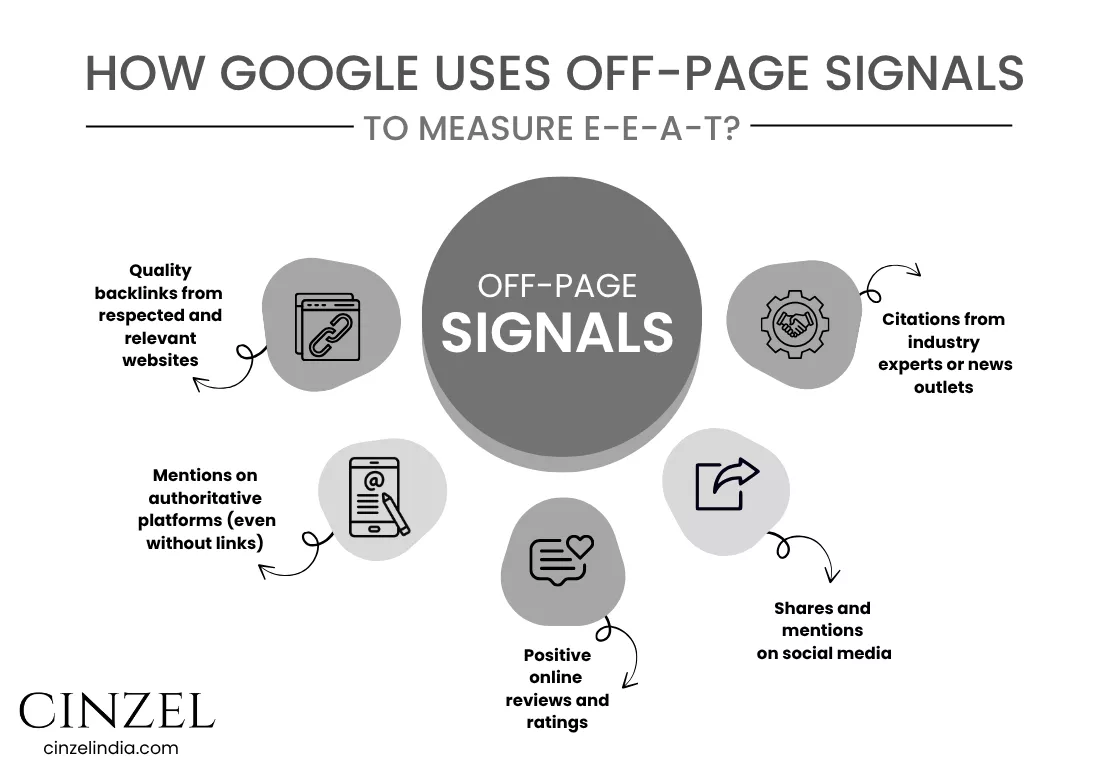
Google uses off-page signals to evaluate E-E-A-T, such as:
-
- Quality backlinks from respected and relevant websites
- Mentions on authoritative platforms (even without links)
- Positive online reviews and ratings
- Shares and mentions on social media
- Citations from industry experts or news outlets.
These signals help Google determine whether real people trust your content and whether it’s worthy of top rankings.
Why Off Page SEO Matters to You as a Website Owner?
As a website owner or creator, Off Page SEO helps you reach more people, build credibility, and rank higher on Google by showing that others trust and value your site—often more than what you say about yourself.
Here is why it matters-
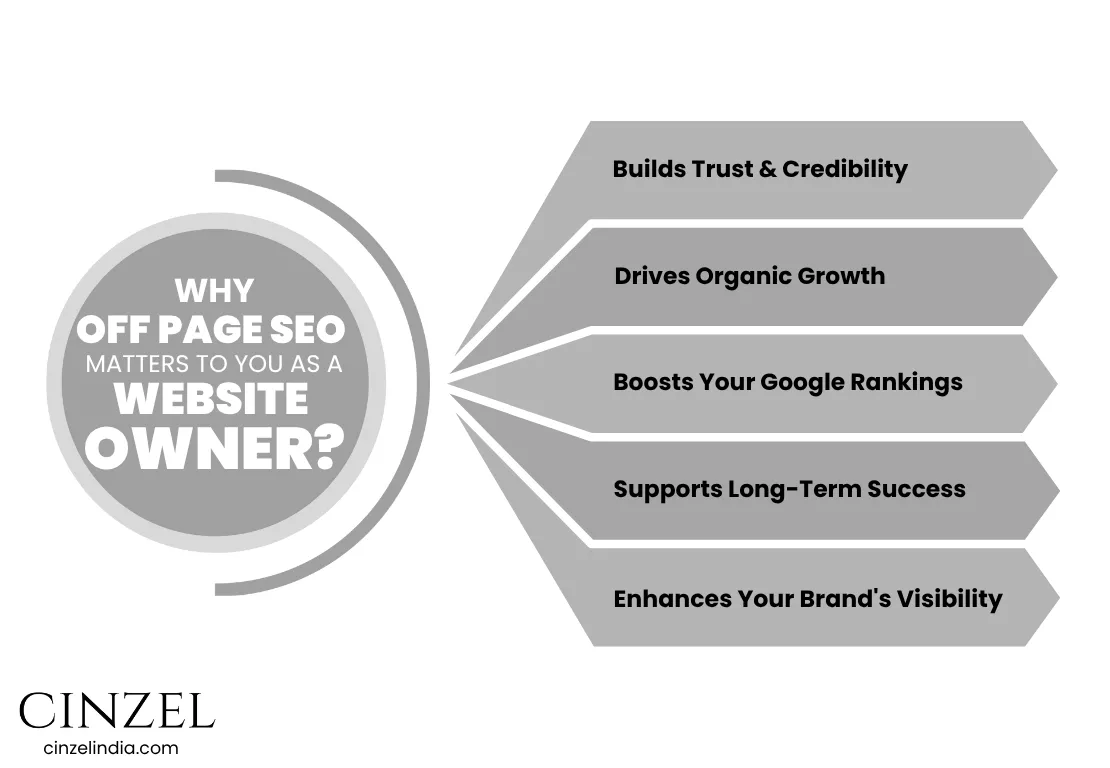
Builds Trust & Credibility
High-quality backlinks and mentions from reputable sources signal to Google that your site is trustworthy. This improves your domain authority and search rankings.
Drives Organic Growth
When your website is talked about, shared, and linked to across the web, more people find you naturally—without paid ads.
Boosts Your Google Rankings
Google uses off-page signals (like backlinks and brand mentions) as ranking factors. The more quality signals you have, the higher you can rank.
Supports Long-Term Success
Unlike short-term tricks, off page SEO helps you build lasting authority and a strong digital reputation, especially important under Google's E-E-A-T guidelines.
Enhances Your Brand's Visibility
A strong off-page presence means your brand shows up on blogs, forums, directories, and social platforms—helping you become a recognized name in your niche.
What Really Powers Off Page SEO? Here Are the Core Elements You Can’t Ignore!
Off Page SEO isn’t just about getting backlinks—it’s a full ecosystem of signals that show Google (and users) that your website is reliable, authoritative, and popular across the web.
Here are the core elements you should focus on:
1. Backlinks (Inbound Links)
The #1 off-page ranking factor. Quality backlinks from relevant, high-authority websites act as strong “votes of confidence” for your content.
Focus on:
-
- Earning links through guest posts
- Creating link-worthy content (infographics, stats, case studies)
- Getting mentioned by influencers or media sites
- Earning links through guest posts
2. Brand Mentions (Linked or Unlinked)
Even when someone talks about your brand without linking, it still helps build your online presence and trust signals.
Get mentioned on:
-
- Forums
- Review sites
- News platforms
- Industry-specific blogs
- Forums
3.Social Signals
While not direct ranking factors, social engagement helps amplify your content reach, drive traffic, and indirectly impact SEO through increased visibility and link opportunities.
Engage with:
-
- Facebook, Instagram, LinkedIn, Pinterest, Twitter/X
- Shareable posts, reels, and blog snippets
- Facebook, Instagram, LinkedIn, Pinterest, Twitter/X
4. Online Reviews & Reputation
Positive ratings and reviews on platforms like Google Business, Yelp, Trustpilot, or industry-specific directories enhance your site's trustworthiness.
Encourage satisfied customers to leave reviews and respond to them professionally.
5. Content Marketing & Guest Posting
Publishing valuable content on external platforms builds authority, expands your audience, and often earns backlinks.
Contribute to:
-
- High-traffic blogs
- News outlets
- Medium, Quora, Reddit (in thoughtful, value-driven ways)
- High-traffic blogs
6. Local Citations & Directory Listings
Especially important for local businesses, accurate NAP (Name, Address, Phone number) listings on sites like Google Maps, JustDial, Yellow Pages, and others signal trust and consistency.
Top Off Page SEO Strategies to Focus On in 2025
Search engines are smarter in 2025—and so are the SEO strategies that drive results. Modern Off Page SEO isn’t just about chasing backlinks. It’s about building genuine authority, earning trust, and becoming visible where your audience already hangs out.
Here are the broad strategic directions you should focus on this year:
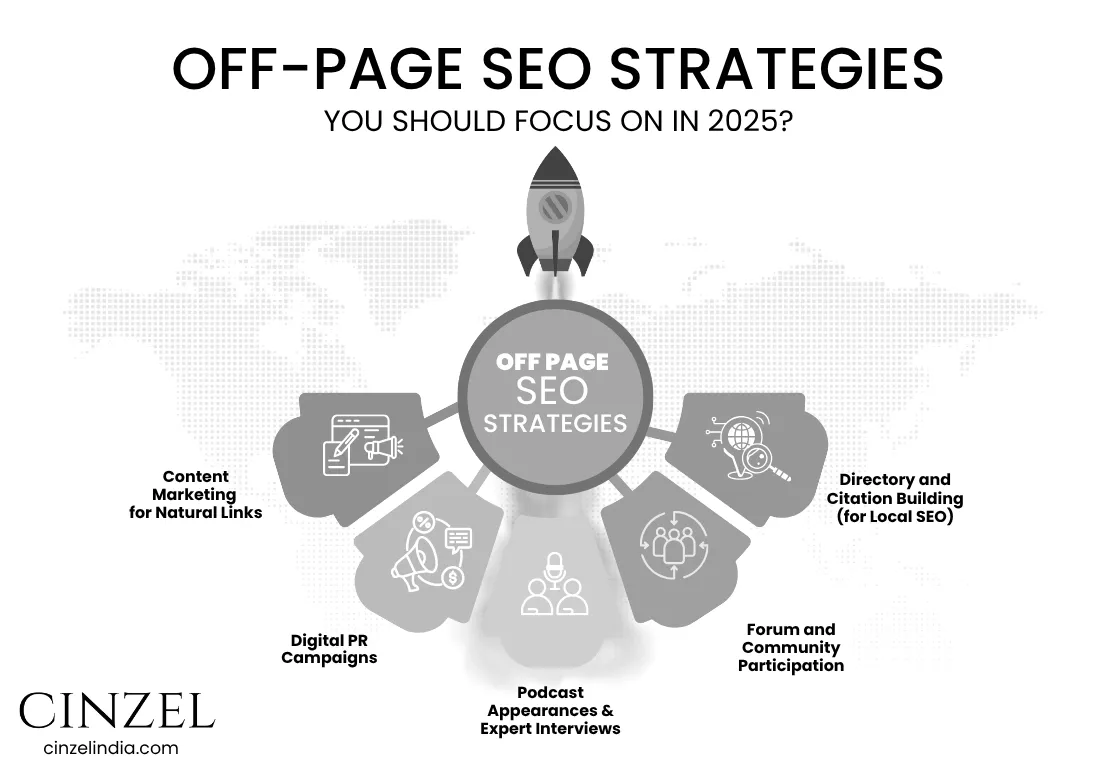
1. Content Marketing for Natural Links
Create valuable, link-worthy content like guides, infographics, and research.
2. Digital PR Campaigns
Pitch newsworthy content to earn media mentions and editorial backlinks.
3. Podcast Appearances & Expert Interviews
Join niche podcasts and expert roundups to build authority and gain backlinks.
4. Forum and Community Participation
Contribute insights on Reddit, Quora, and niche forums with thoughtful content links.
5. Directory and Citation Building (for Local SEO)
Maintain consistent NAP details across local directories for better local SEO.
Want Results? Try These Proven Best Off Page SEO Techniques Today
Proven Tactics You Can Apply Right Away for Better Rankings
If you’ve got the strategy, now it’s time for execution. These off page SEO techniques aren’t just theory—they’re practical, actionable, and beginner-friendly ways to start earning backlinks, visibility, and trust across the web.
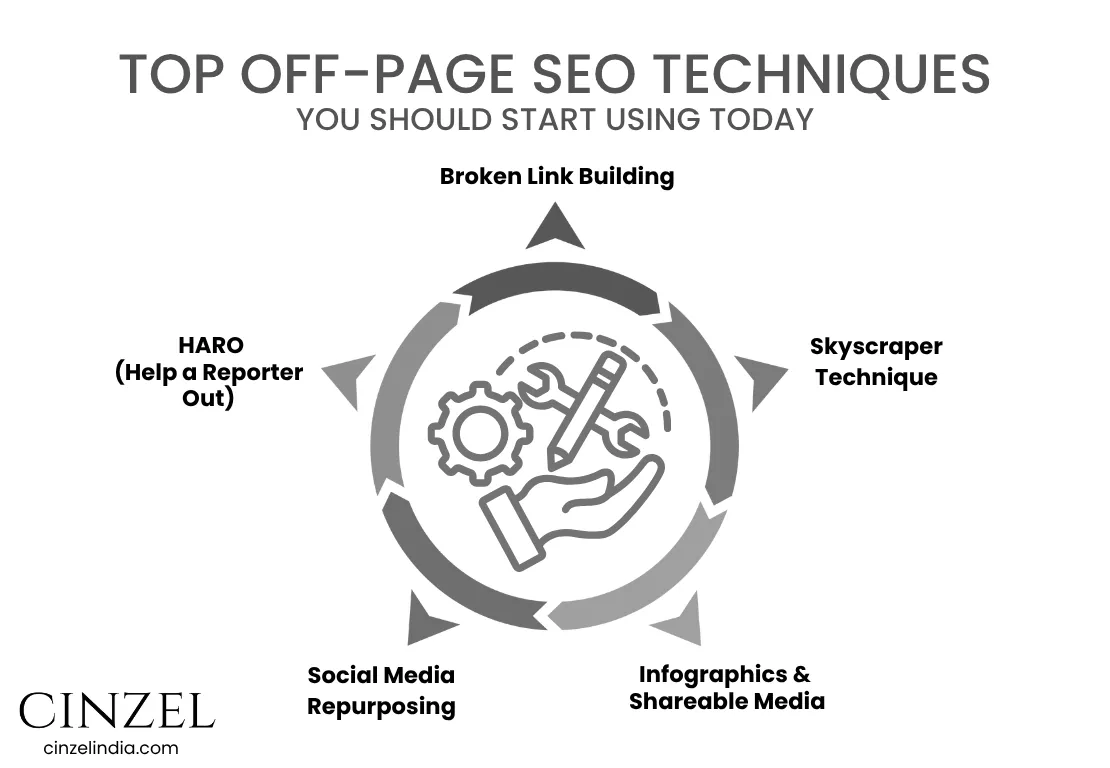
1. Broken Link Building
Identify broken links on other sites and recommend your content as a suitable replacement.
Tools: Ahrefs, Broken Link Checker, Hunter.io
Tip: Target niche-specific blogs that have outdated or broken links.
2. Skyscraper Technique
Identify popular content in your niche, then create something better, deeper, or more up-to-date. Contact the sites that are linked to the original content.
Tools: BuzzSumo, SEMrush
Tip: Add stats, visuals, or updated data to outshine the original
3. HARO (Help a Reporter Out)
Respond to journalist queries and get featured in media stories with a high-authority backlink.
Website: helpareporter.com
Tip: Respond quickly and offer genuine expertise or data.
4. Social Media Repurposing
Turn your blog posts into carousels, reels, infographics, or tweet threads to increase shareability and attract attention across platforms.
Platforms: Instagram, LinkedIn, X (Twitter), Pinterest
Tip: Always link back to your original content where possible.
5. Infographics & Shareable Media
People love visuals. Create infographics, charts, or explainer graphics and encourage others to embed or share—with credit.
Tools: Canva, Visme, Piktochart
Tip: Submit your infographics to directories like Visual.ly or Infographic Journal.
How to Master Off Page SEO: A Complete Step-by-Step Guide
You don’t need to be an SEO expert (or hire one) to start seeing real results from Off Page SEO. Whether you’re a blogger, small business owner, or content creator, this DIY approach gives you a simple path to build trust, backlinks, and visibility.
Step 1: Analyze Your Current Backlink Profile
Before building new links, understand what you already have.
Use tools like Ahrefs, SEMrush, Moz, or Ubersuggest to:
-
- Identify referring domains
- Spot low-quality or spammy links
- See what content is attracting links
This helps you know your starting point and fix weak areas.
- Identify referring domains
Step 2: Research Link Opportunities
Identify relevant websites, blogs, directories, and platforms in your niche that offer link-building opportunities.
Try:
-
- Competitor backlink analysis
- Google search operators (e.g., “write for us” + your niche)
- Tools like BuzzSumo or Hunter.io for outreach leads
- Focus on relevance, authority, and value—don’t just chase quantity.
- Competitor backlink analysis
Step 3: Craft Outreach Content or Guest Posts
Now create valuable content that others want to link to or publish.
This could be:
-
- Guest posts
- Expert roundups
- Testimonials
- Infographics
- Case studies
Personalize your outreach emails—nobody likes spam!
- Guest posts
Step 4: Promote Content via Social, Email & Communities
Content alone doesn’t go viral—promotion does the work.
Distribute your content across:
-
- Social media (LinkedIn, Twitter/X, Facebook groups)
- Email newsletters
- Online communities (Reddit, Quora, niche forums)
Greater visibility increases the chances of your content being shared and linked to.
- Social media (LinkedIn, Twitter/X, Facebook groups)
Step 5: Track & Refine Your Efforts
Use tools to measure what’s working:
-
- Which backlinks are helping your rankings?
- Which guest posts bring referral traffic?
- What social posts drive engagement?
- Track with: Google Search Console, Ahrefs, UTM links, Google Analytics
Keep optimizing your strategy based on performance.
- Which backlinks are helping your rankings?
Pro Tip: Off Page SEO is a Marathon, Not a Sprint
Be consistent. Be genuine. Keep showing up across the web—and you’ll start seeing long-term gains in rankings, traffic, and brand trust.
Why do some websites rank higher even with similar content? Here’s why-
What Google Actually Looks at Behind the Scenes- You’ve built backlinks and shared your content—but what really influences your rankings in Google’s eyes?
Google’s algorithm is smarter than ever in 2025. It’s not just that you have links—it's about where they come from, how relevant they are, and what kind of trust signals surround your brand. Let’s break down the most important Off Page SEO ranking factors:
1. Authority of Linking Domains
Links from high-authority websites (like major publications or trusted industry blogs) carry more weight than those from low-quality or spammy sites.
The higher the Domain Authority (DA) or Domain Rating (DR), the stronger the signal.
2. Relevance of Backlinks
A link from a related or niche-relevant site is far more valuable than one from an unrelated source.
Example: A backlink from a fashion blog is more useful for a clothing brand than one from a tech blog.
3. Anchor Text Distribution
The clickable text (anchor text) of your backlinks matters. Google analyzes whether your link profile has:
-
- Branded anchors (e.g., “Shristyles”)
- Exact-match keywords (e.g., “Pakistani suits”)
- Natural or generic anchors (e.g., “click here”)
Over-optimization can hurt, so aim for natural variety.
- Branded anchors (e.g., “Shristyles”)
4. Number of Referring Domains
It’s better to get 100 links from 100 different websites than 100 links from the same site.
Google values a diverse link profile—it shows widespread trust.
5. Link Freshness (Recency)
Search engines favor fresh links from recent content.
Keep earning new backlinks consistently to stay competitive.
6. E-E-A-T Signals (Experience, Expertise, Authoritativeness, Trustworthiness)
Off-page signals contribute heavily to how Google evaluates your site’s E-E-A-T.
Mentions from credible sources, backlinks from expert authors, and brand recognition all play a part.
7. Social & Brand Reputation
While social signals aren’t direct ranking factors, they contribute to brand visibility, trust, and link potential.
Higher engagement leads to greater visibility, opening up more opportunities for backlinks. Meanwhile, positive reviews and online mentions build brand credibility and trust.
How Google Views Off Page SEO Signals in 2025?
In 2025, Google’s smarter AI-driven algorithm prioritizes trust, relevance, and credibility over bulk backlinks. Off Page SEO now focuses on earning genuine authority and building a strong, trustworthy online presence;
Here’s how Google interprets Off Page SEO signals in today’s search landscape:
1. Quality Over Quantity
Google values relevant, high-authority backlinks over bulk links; spammy tactics are penalized.
2. AI Evaluates Link Intent & Credibility
Algorithms assess if links are editorial, contextual, and trustworthy—not manipulative.
3. Trust, Brand, and Authority Signals Take Center Stage
Brand mentions, authoritative presence, and public trust boost rankings.
4. Implied Links & Unlinked Brand Mentions Are Gaining Weight
Unlinked brand mentions now signal authority and relevance.
5. E-E-A-T is Now Deeply Embedded in Ranking Logic
Off-page factors help validate your experience, expertise, authority, and trustworthiness.
How Can You Take Your Off-Page SEO to the Next Level?
Even if you’ve nailed the basics, a few additional tactics can give you a serious edge:
Content Syndication
Repost your blog posts on platforms like Medium, LinkedIn Articles, and Quora Spaces (with proper canonical tags or links back). It helps increase reach and drive referral traffic from new audiences.
Engage in Online Communities
Participate meaningfully in Reddit threads, Quora Q&As, and niche forums. Offering real help earns credibility — and often backlinks when you share a resource or blog.
Leverage Influencer Mentions
Collaborate with influencers or niche experts to co-create content or get featured in roundup posts. A single backlink from a trusted source can do more than dozens of low-authority ones.
Optimize for Local Off-Page SEO
Get listed in local directories (JustDial, Sulekha, Google Business Profile, etc.). Ensure NAP (Name, Address, Phone) consistency across all platforms to boost local trust signals.
Spy on Competitors
Use tools like Ahrefs or SEMrush to explore where your competitors are getting links from. Reach out to the same sites with your own, better content.
Track What’s Working
Set up Google Analytics, Search Console, or Ubersuggest to track:
-
- Referring domains
- Backlink growth
- Referral traffic
- DA/PA improvements
Common Off Page SEO Mistakes to Avoid
-
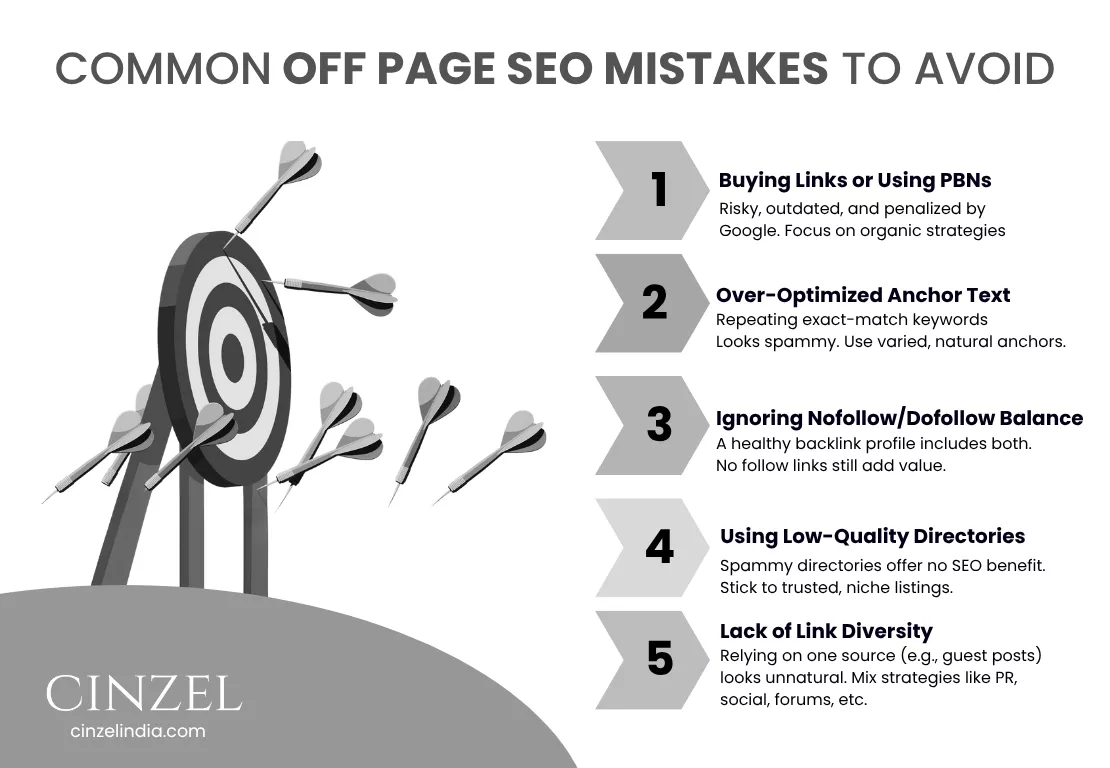
- Buying Links or Using PBNs - Risky, outdated, and penalized by Google. Focus on organic strategies.
- Over-Optimized Anchor Text - Repeating exact-match keywords looks spammy. Use varied, natural anchors.
- Ignoring Nofollow/Dofollow Balance- A healthy backlink profile includes both. No follow links still add value.
- Using Low-Quality Directories - Spammy directories offer no SEO benefit. Stick to trusted, niche listings.
- Lack of Link Diversity - Relying on one source (e.g., guest posts) looks unnatural. Mix strategies like PR, social, forums, etc.
- Buying Links or Using PBNs - Risky, outdated, and penalized by Google. Focus on organic strategies.
Off-Page SEO Checklist: 15 Actionable Tasks for Beginners & Pros
- Claim your Google Business Profile
- Submit your business to JustDial, Sulekha, IndiaMart
- Publish 3 guest posts per month
- Build high-quality social profiles
- Answer 5 questions weekly on Quora/Reddit
- Repurpose blogs into Instagram reels/LinkedIn carousels
- Earn at least 5 new backlinks per month
- Run broken link building campaigns
- Create one infographic per quarter
- Pitch two journalists on HARO weekly
- Collect 10 customer reviews per month
- Share content in niche forums
- Monitor brand mentions with Brand24
- Spy on competitor links monthly
- Disavow spammy links in Google Search Console
The Ultimate Toolkit for Off-Page SEO Success
Off-page SEO is all about building quality backlinks, improving domain authority, and increasing your site’s search visibility beyond on-page factors. To do this effectively, you need the right tools. Below are free and affordable paid tools with details on what’s included in the free version and pricing for upgrades.
Free Off-Page SEO Tools
1. Google Search Console
-
-
- Why Use It: Monitor backlinks, fix indexing issues, and track organic traffic.
- Free Access: 100% free, ideal for link building and performance monitoring.
- LSI Keywords: backlink analysis, indexing, link performance.
- Why Use It: Monitor backlinks, fix indexing issues, and track organic traffic.
-
2. Moz Link Explorer
-
-
- Why Use It: Check domain authority, page authority, and spam score for your link profile.
- Free Access: 10 free link queries per month.
- Paid Plan: Starts at $99/month.
-
3. Ahrefs Free Backlink Checker
-
-
- Why Use It: See top referring domains, anchor text, and inbound links.
- Free Access: View top 100 backlinks for any site.
- Paid Plan: Starts at $99/month.
-
4. Ubersuggest (by Neil Patel)
-
-
- Why Use It: Perform backlink audits, find link opportunities, and track keyword rankings.
- Free Access: 3 searches per day.
- Paid Plan: Starts at $12/month (affordable for beginners).
-
Affordable Paid Tools for Off-Page SEO
1. SEMrush
-
-
- Why Use It: Complete suite for backlink analysis, competitor research, and link building campaigns.
- Free Access: 10 requests/day on free plan.
- Paid Plan: Starts at $129.95/month.
-
2. BuzzSumo
-
-
- Why Use It: Find trending content and link-worthy content for outreach.
- Free Access: 10 searches/month.
- Paid Plan: Starts at $119/month.
-
3. Pitchbox
-
-
- Why Use It : Automate email outreach, guest posting, and influencer marketing.
- Free Access : Free demo available.
- Paid Plan : Starts at $195/month.
-
4. Brand24
-
-
- Why Use It : Track brand mentions, find unlinked brand mentions, and monitor online reputation.
- Free Access : 14-day free trial.
- Paid Plan : Starts at $79/month.
-
Note: Pricing for paid tools is approximate and may vary based on plans, region, and currency.
Best Budget-Friendly Strategy for Beginners
- Combine Google Search Console (Free), Ahrefs Free Backlink Checker, and Ubersuggest for maximum value at low cost.
- These tools will help with link building, domain authority improvement, and off-page SEO optimization.
Want Rankings? Win Trust First.
You can't game Google's algorithm anymore. But you can earn its trust. Off Page SEO is how you show credibility, authority, and relevance in all the places that matter. Focus on building real relationships, helpful content, and a strong digital reputation—and search engines will reward you in kind.
- - - - - - - - - - - - - - - - - - - - - - - - - - - - - - - - -
Cinzel Note: This guide is crafted for Noida businesses and digital marketers who want to understand Off-Page SEO without the jargon. The strategies shared here are based on current trends and practical experience in SEO campaigns. If you have questions or want a personalized strategy, feel free to connect.
Disclaimer: All information provided in this blog, including tool pricing, features, and strategies, is based on the latest available data at the time of writing. Actual prices and features may vary depending on region, currency, and plan selection. SEO results are not guaranteed and depend on various factors such as industry competition, website quality, and implementation consistency.
