
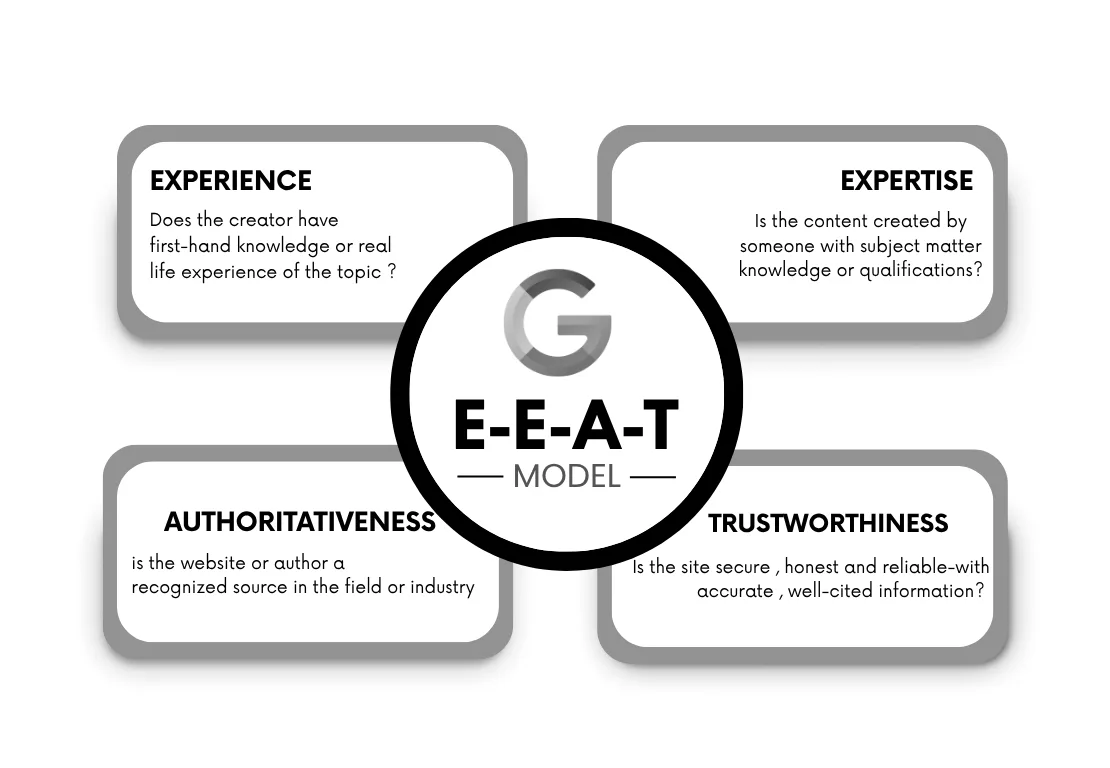
SEO in 2025 isn’t just about keywords or backlinks — it’s about understanding user intent, embracing AI in SEO, and creating seamless digital experiences. With innovations like Google’s Search Generative Experience (SGE), staying visible means aligning with intent-driven algorithms. Traditional SEO strategies still matter, but real success comes from content that reflects E-E-A-T — Experience, Expertise, Authoritativeness, and Trustworthiness — while answering user needs with precision.
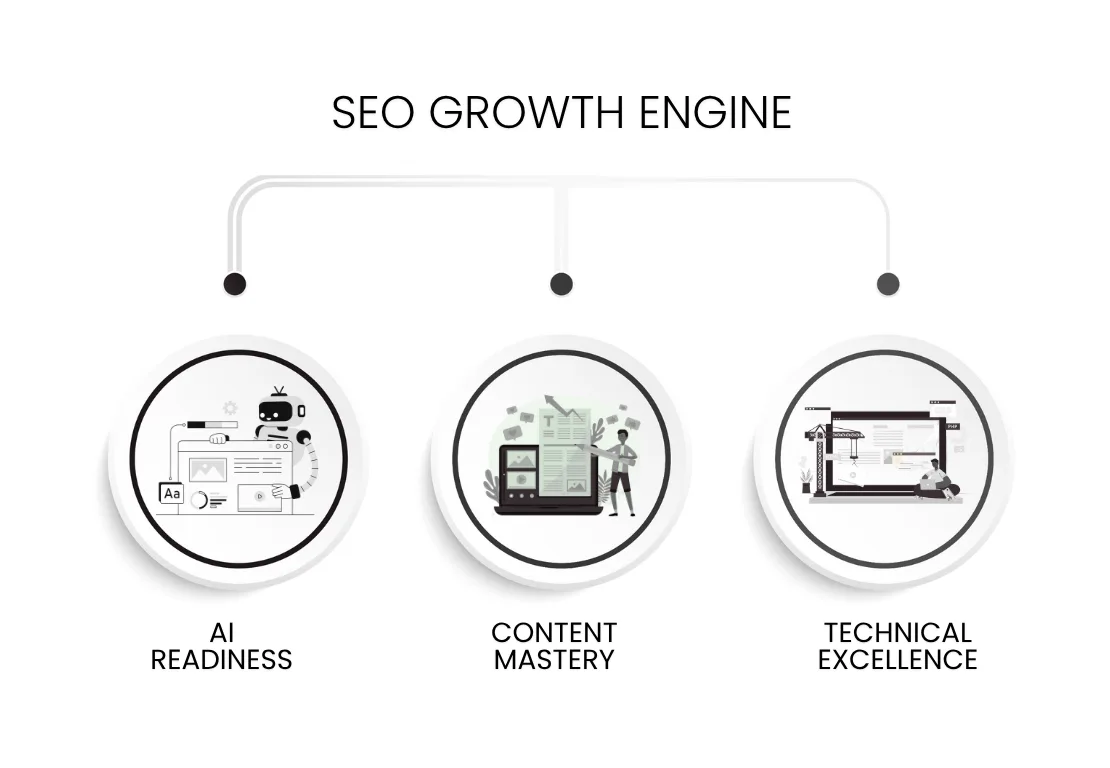
In today’s digital-first world, visibility on Google search results is critical. You may have amazing products or insights, but without organic traffic growth, your audience may never find you. That’s where search engine optimization (SEO) becomes your growth engine — combining AI readiness, content optimization, and technical SEO best practices to help search engines understand and trust your brand.
Think of SEO as rolling out a red carpet to your digital doorstep — attracting qualified traffic, better leads, and long-term growth. Whether you’re a blogger, startup, or established business, mastering SEO in the AI era means staying competitive and showing up exactly where your customers are searching.
This guide will walk you through modern SEO — from fundamentals to future-forward strategies — to help you thrive in 2025 and beyond.
What is Search engine optimization (SEO)?
SEO, or Search Engine Optimization, is the art and science of making your website more visible to the right people on search engines like Google. It involves fine-tuning your site’s content, structure and performance so that when users search for your offerings, your pages appear at the top. Instead of paying for ads, SEO drives organic search traffic — people already interested in your products or services. With consistent SEO-friendly content, smart keyword optimization, and solid technical SEO, your site becomes a 24/7 marketing machine.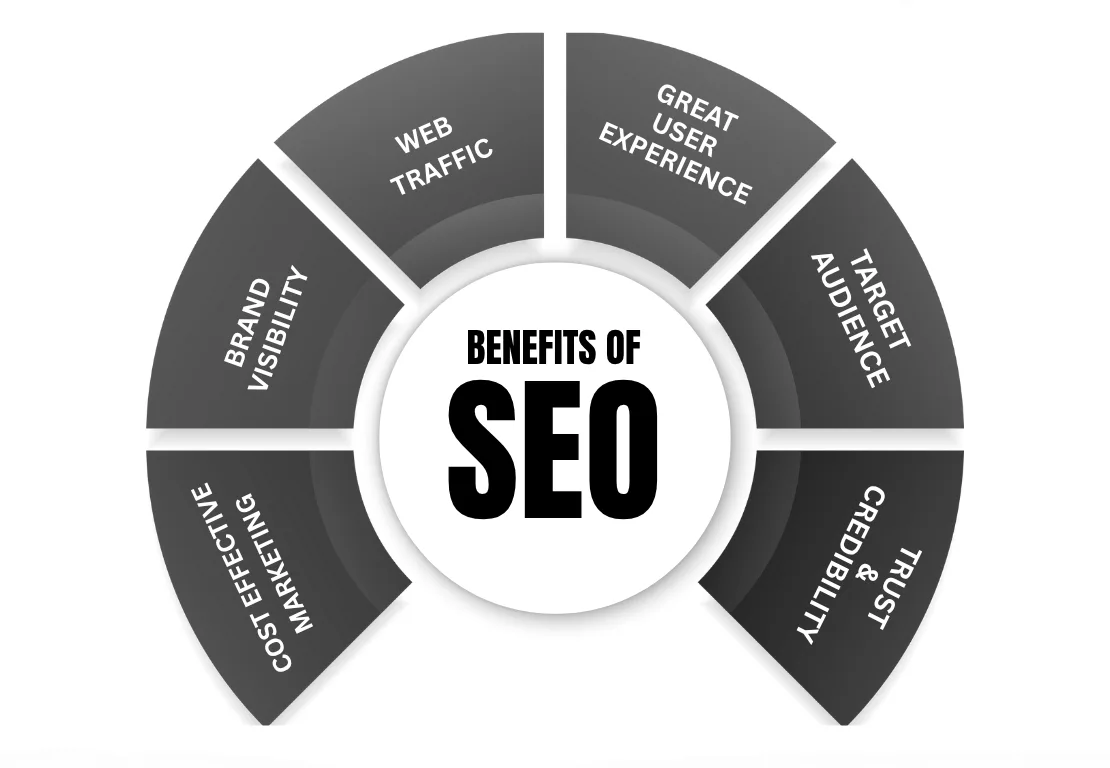
1. Increases Website Traffic
SEO helps boost your website’s position in search engine results like Google.
Why it matters:
According to Backlinko, the top 3 Google search results get over 75% of clicks. With higher rankings, your content is more likely to be seen—and clicked—by users actively searching for your offerings.
2. Enhances User Experience
Modern SEO goes beyond keywords—it prioritizes page speed, mobile-friendliness, intuitive navigation, and helpful content.
Why it matters:
Google’s algorithm uses Core Web Vitals (as per Google Search Central) to measure user experience. A seamless, satisfying UX keeps users engaged and reduces bounce rates.
3. Builds Trust & Credibility
A site that ranks well is perceived as reliable and authoritative.
How SEO helps:
-
-
Publishing well-researched, useful content (E-E-A-T principles: Expertise, Experience, Authoritativeness, Trustworthiness)
-
Ensuring HTTPS security
-
Earning quality backlinks
-
These factors contribute to building your brand’s online reputation and trustworthiness in both user and algorithmic eyes.
4. Cost-Effective, Long-Term Strategy
Unlike paid advertising (which stops when the budget ends), SEO offers sustainable visibility.
Why it matters:
Once your content ranks, it can bring free, targeted traffic for months or even years, making it one of the most cost-efficient forms of digital marketing (Search Engine Journal).
5. Improves Brand Visibility & Recognition
Every time your brand appears in search results, users become more familiar with your name.
Why it matters:
Even non-click impressions help reinforce your brand presence. Over time, this top-of-mind awareness builds recognition and increases the likelihood of conversions.
6. Helps Reach the Right Audience at the Right Time
SEO targets specific keywords, search intent, and user needs, ensuring your website is found by people actively looking for your products or services.
Why it matters:
This leads to higher-quality traffic, better engagement, and stronger conversion potential compared to broad, untargeted marketing.
Types of SEO: A Deep Dive Into the Pillars of Search Engine Optimization
In today’s highly competitive online world, Search Engine Optimization (SEO) has become essential rather than optional. But SEO isn’t a one-size-fits-all solution. To truly harness its power, you must understand its different types and how each one works in harmony to improve your online visibility.
Here’s a detailed look at the main types of SEO, supported by insights from authoritative sources like Google Search Central, Moz, and Search Engine Journal.
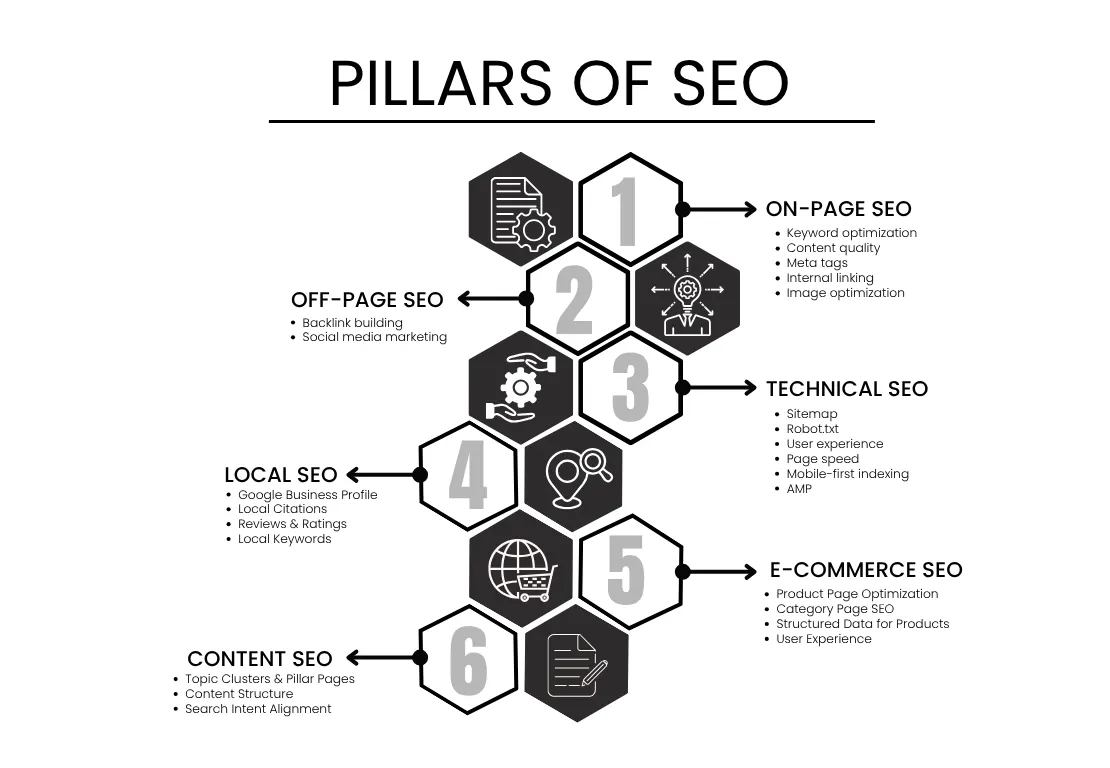 On-Page SEO: Optimizing Content and Code
On-page SEO involves optimizing elements within your website that influence how well it ranks in search results.
Key Elements:
-
-
-
Keyword Optimization: Use targeted keywords naturally in your titles, headings, content, and meta tags.
-
Meta Tags: The <title> and <meta description> tags play a crucial role in click-through rates.
-
Header Tags:Using H1, H2, and H3 tags correctly enhances the organization and clarity of your content.
-
Internal Linking: Links to other pages within your site help search engines crawl and distribute authority.
-
Image Optimization: Alt text, file size, and descriptive names are key for accessibility and SEO.
-
-
According to Moz, on-page optimization ensures that search engines understand your content and rank it appropriately.
Off-Page SEO: Building Authority Beyond the Website
Off-page SEO involves external efforts that influence your website’s search engine rankings.The most well-known aspect is backlink building, but it goes beyond that.
Key Elements:
-
-
-
Backlinks: High-quality backlinks from authoritative domains signal trust to Google.
-
Social Signals: Engagement on social media can indirectly support SEO by increasing visibility and link opportunities.
-
Influencer Outreach: Collaborating with niche influencers can help earn natural backlinks.
-
Brand Mentions: Even unlinked brand mentions can contribute to search engine trust (Source: Google’s patent on implied links).
-
-
As per Search Engine Journal, Google uses off-site signals to determine a website's authority and popularity.
Technical SEO: Optimizing Site Infrastructure
Technical SEO ensures that your website is structured in a way that search engines can easily crawl, index, and render your pages.
Key Elements:
-
-
-
Mobile-Friendliness: Mobile-first indexing means Google prioritizes mobile versions of websites.
-
Site Speed: Websites that load quickly provide a better user experience and achieve higher search rankings.
-
Secure Website (HTTPS): Google gives preference to secure sites.
-
XML Sitemap & Robots.txt: These help guide search engine crawlers.
-
Structured Data (Schema Markup): Enables rich snippets like star ratings, FAQs, and product info in search results.
-
-
According to Google Search Central, technical SEO is essential to help search engines access and interpret your content.
Local SEO: Ranking for Local Intent
Local SEO is essential for businesses that serve specific geographic areas. It helps your business appear in local searches, like “salon near me” or “best electrician in Noida.”
Key Elements:
-
-
-
Google Business Profile (formerly Google My Business): Critical for visibility in Google Maps and local packs.
-
Local Citations: Consistent Name, Address, Phone (NAP) listings across directories like Yelp, JustDial, and Yellow Pages.
-
Reviews & Ratings: Positive reviews boost local ranking and user trust.
-
Local Keywords: Use geo-specific keywords such as "digital agency in Delhi."
-
-
According to BrightLocal, 93% of consumers use online searches to find local businesses.
E-commerce SEO: Optimizing Online Stores
E-commerce SEO is tailored for product-based websites to improve visibility across product listings and category pages.
Key Elements:
-
-
-
Product Page Optimization: Include original titles, meta descriptions, and detailed product content.
-
Category Page SEO: Structure and enhance category pages using targeted keywords.
-
Structured Data for Products: Highlight price, stock status, and customer reviews through rich snippets.
-
User Experience: Filters, search functionality, and mobile responsiveness are critical.
-
-
As per Ahrefs, optimizing even a few product pages can result in massive traffic gains due to high purchase intent.
Content SEO: Fueling Visibility Through Value
Content SEO involves developing and refining valuable content to achieve higher search engine rankings.It overlaps with on-page SEO but focuses more on strategy and structure.
Key Elements:
-
-
-
Search Intent Alignment: Create content that matches what users are actually looking for.
-
Content Structure: Use short paragraphs, bullet points, and visuals to improve readability.
-
Topic Clusters & Pillar Pages: Create interlinked content around core topics for authority.
-
-
HubSpot’s Topic Cluster Model is a proven approach to dominate search engines with organized, in-depth content.
In Short: Optimize Holistically
Each type of SEO serves a specific purpose, but when combined, they create a powerful digital presence. Whether you’re running a local service, an online store, or a global brand, understanding and applying all aspects of SEO will position you for long-term growth.
Pro Tip: Start with a solid technical foundation, create user-centric content, and build authority with ethical off-page strategies.
Organic Search vs. Paid Search: Which Strategy Wins in 2025?
When you're aiming to drive traffic to your website, there are two primary methods: Organic Search and Paid Search. Both offer value, but each serves a different purpose. Choosing the right strategy—or combination—depends on your goals, budget, and timeline.
What is Organic Search?
Organic Search refers to the natural results that appear on search engines like Google, without paying for placement.These results are ordered according to their relevance, content quality, and adherence to SEO best practices.
Key Characteristics:
-
-
-
Appears naturally below the ads
-
Driven by Search Engine Optimization (SEO)
-
Influenced by content quality, keywords, site structure, user experience, and backlinks
-
Builds long-term presence and authority
-
Rankings take time to grow but offer sustainable results
-
-
Think of organic search like planting a tree: slow growth, but lasting shade.
What is Paid Search?
Paid Search, often called Search Engine Marketing (SEM) or Pay-Per-Click (PPC), allows businesses to pay for visibility on search engines. Platforms like Google Ads let advertisers bid for top positions.
Key Characteristics:
-
-
-
Shows as “Sponsored” or “Ad” results
-
Offers immediate placement above organic listing
-
Charges based on clicks (CPC) or impressions (CPM)
-
Allows fine-tuned targeting (location, device, audience intent)
-
Traffic stops once budget runs out
-
-
Paid search is like renting a billboard—you get instant visibility, but only while you pay.
Organic vs. Paid Search – Quick Comparison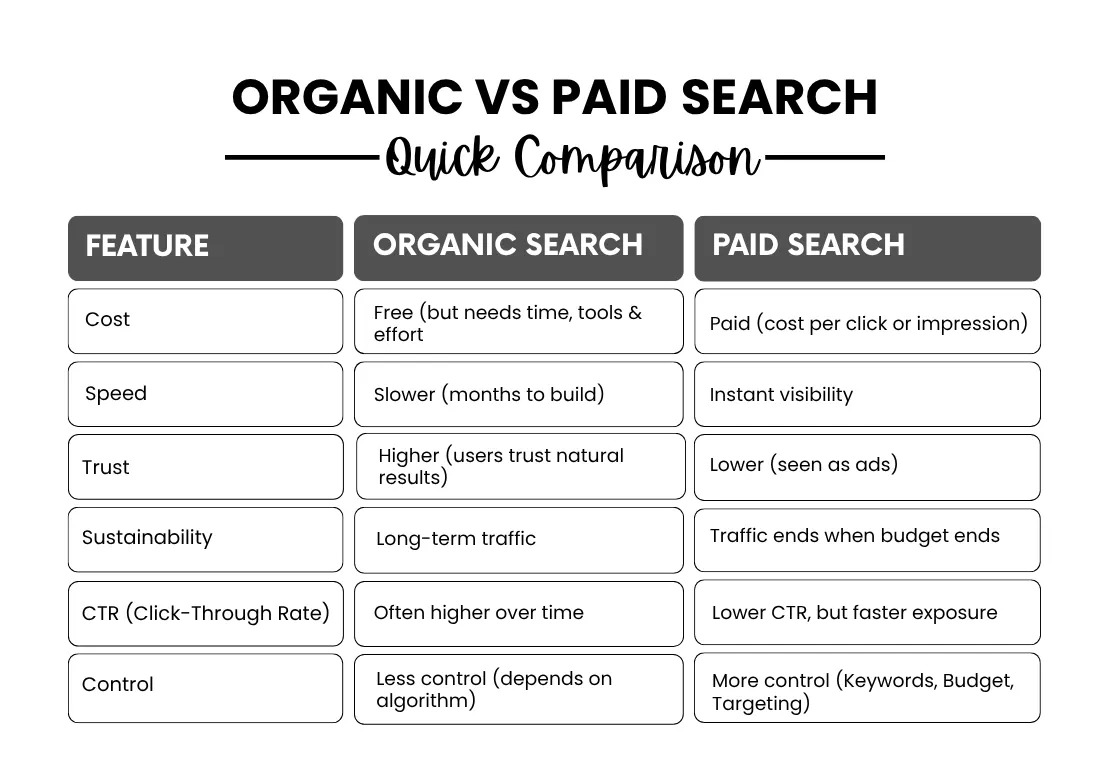
|
Feature |
Organic Search |
Paid Search |
|
Cost |
Free (but needs time, tools & effort) |
Paid (cost per click or impression) |
|
Speed |
Slower (months to build) |
Instant visibility |
|
Trust |
Higher (users trust natural results) |
Lower (seen as ads) |
|
Sustainability |
Long-term traffic |
Traffic ends when budget ends |
|
CTR (Click-Through Rate) |
Often higher over time |
Lower CTR, but faster exposure |
|
Control |
Less control (depends on algorithm) |
More control (keywords, budget, targeting) |
Which One Is Better?
Let’s weigh the pros and cons of both strategies to help you decide.
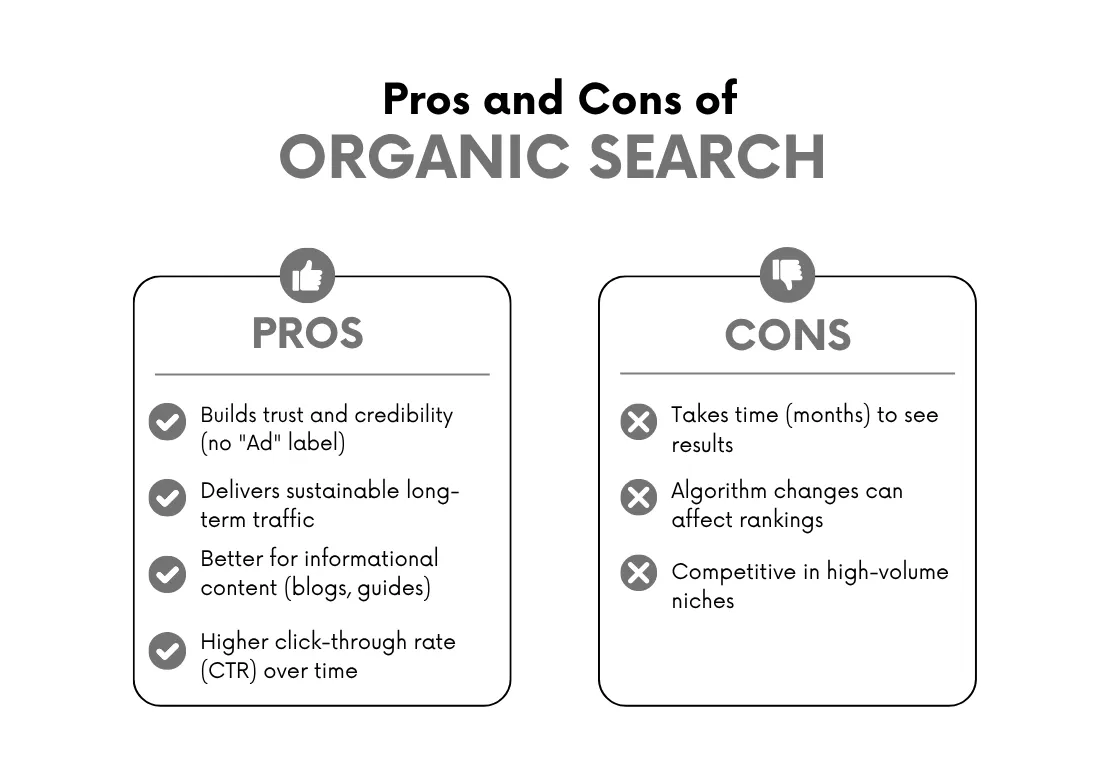
Organic Search – Pros:
-
- Builds trust and credibility (no ad label)
- Offers long-lasting traffic with compounding benefits
- Ideal for informational content (blogs, guides)
- Cost-effective over the long run
- Higher CTR once authority is established
Organic Search – Cons:
-
-
Takes time to show results (3–6+ months)
-
Subject to Google algorithm updates
-
Highly competitive in certain niches
-
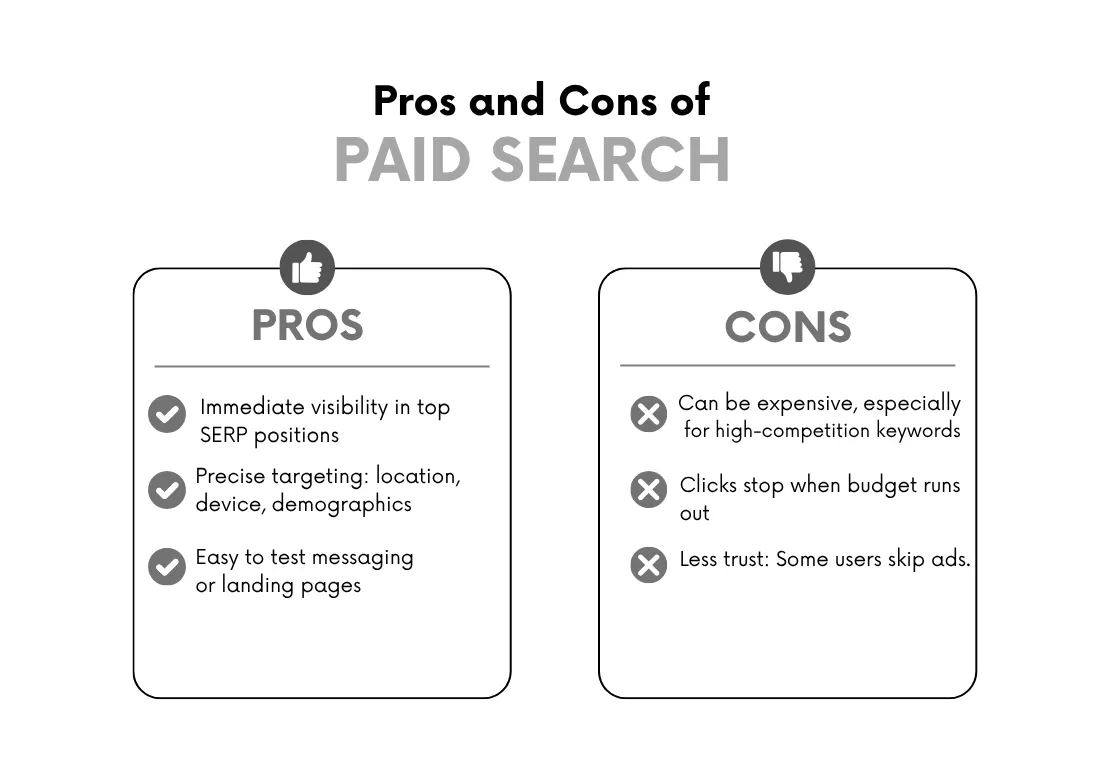
Paid Search – Pros:
-
-
Immediate visibility on search engine result pages (SERPs)
-
Highly targeted—by location, time, device, demographics
-
Great for product launches, sales, or time-sensitive campaigns
-
Allows easy A/B testing for headlines and landing pages
-
Paid Search – Cons:
-
-
Can be expensive, especially in competitive industries
-
Traffic drops instantly when the budget stops
-
Some users skip ads due to lack of trust
-
Final Verdict: Use Both Strategically
There’s no one-size-fits-all answer. An effective approach typically integrates both organic and paid search methods.
-
-
Use Paid Search for fast, short-term wins and campaigns.
-
Invest in Organic SEO for long-term growth, trust, and authority.
-
Balancing both gives your brand visibility now and relevance later.
Behind the Scenes of the Web: How Search Engines Operate
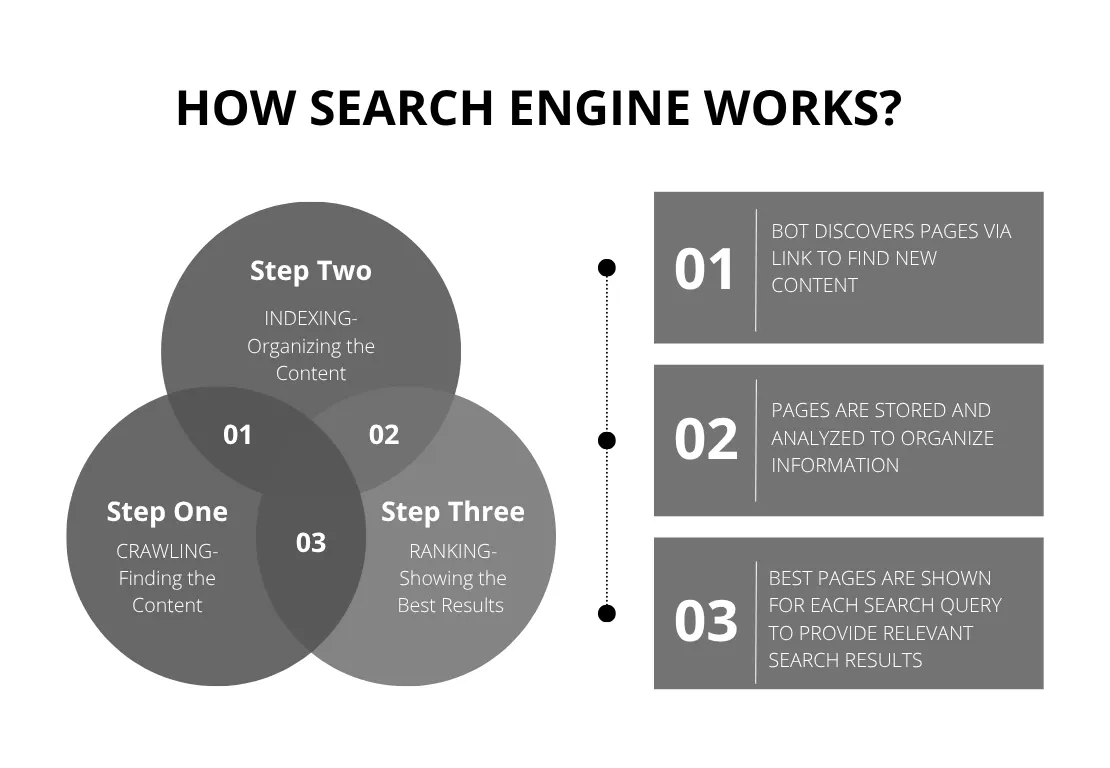 1. Crawling – Finding the Content
Crawling is the process where search engines send bots ( also called spiders or crawlers) to discover pages on the internet.
How it works:
-
-
-
The crawler starts with a list of known web pages (called a seed list).
-
It navigates through links on those pages to discover additional ones.
-
Every time it finds a new page, it downloads and reads the content.
-
-
If your site has no internal links or blocks bots in robots.txt, it might not be crawled.
Example:
Googlebot visits example.com, finds a link to example.com/blog, and then finds a link to example.com/blog/seo-tips. All of these pages are scanned and saved in the system.
2. Indexing – Organizing the Content
Indexing is the process of storing and organizing the information the crawler finds so that it can be retrieved and ranked later.
What search engines store:
-
-
-
Page content (text, images, video)
-
Keywords and topics
-
Page title and meta description
-
Structured data (schema markup)
-
Page URL, mobile-friendliness, and speed
-
-
If a page has thin content, is duplicate, or contains errors, it may not be indexed.
Example:
Your article “10 SEO Tips for Beginners” is read and stored by Google in its massive index. When someone searches “beginner SEO tips,” Google may retrieve this page.
3. Ranking – Showing the Best Results
Ranking is the process of ordering the search results by relevance, quality, and authority in response to a user’s query.
Google’s Ranking Algorithm Considers:
-
-
-
Keyword relevance
-
Content quality and freshness
-
Page speed
-
Mobile usability
-
Backlinks (authority/trust)
-
User behavior (clicks, bounce rate)
-
Structured data (rich snippets)
-
Core Web Vitals (UX performance)
-
-
Example:
When a user searches "best laptops under ?50,000", Google scans its index for pages matching that topic, evaluates which are the most helpful, trustworthy, and user-friendly, and ranks them accordingly.
SEO Success Formula: No Shortcuts, Just Smart Work
Dreaming of page-one rankings? This SEO Starter Guide is your launchpad. Whether you're a curious learner or a digital hustler, unlock the real formula behind sustainable SEO success. Forget shortcuts—master content, keywords, tech, and UX with clarity and confidence. Ready to build something Google—and users—can’t ignore? Let’s begin.
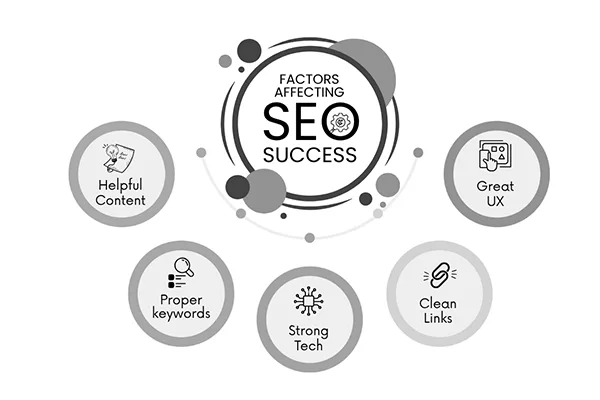
Formula: SEO Success = Helpful Content + Proper Keywords + Strong Tech + Clean Links + Great UX
1. Helpful & Relevant Content
Google ranks content that:
-
-
Answers the user’s intent clearly
-
Is original, well-structured, and trustworthy
-
Provides real value, not just keywords
-
Note: Write what users actually need — not what bots want.
2. Smart Keyword Integration
-
-
Use relevant keywords naturally in your title, headings, and URL.
-
Don’t overstuff; focus on how users actually search.
-
Write for people first, not algorithms.
-
3. Technically Sound Website
-
-
Fast, mobile-friendly, and secure (HTTPS)
-
Easy to crawl and index (use robots.txt and sitemap.xml)
-
Fix broken links and reduce clutter
-
4. Earned Backlinks
-
-
Build real relationships and create genuine content worth linking to.
-
Avoid shortcut tactics like buying or trading links.
-
5. Strong User Experience (UX)
-
-
Easy navigation, no popups, fast page speed
-
Keep users engaged with clear content and CTAs
-
Google rewards websites that keep users happy and informed.
Spicy Truth for SEO Lovers:
SEO isn’t instant noodles – it’s more like slow-cooked biryani.
It takes time, layers of effort, and the right Google-approved ingredients to get it ranking right!
